Mutual Funds and Mutual Fund Investing - Fidelity Investments
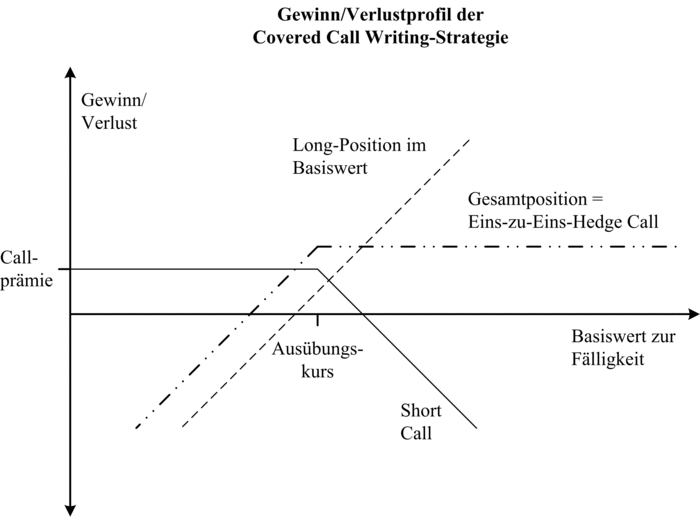
Writing a covered call means you’re selling someone else the right to purchase a stock that you already own, at a specific price, within a specified time frame. Because one option contract usually represents shares, to run this strategy, you must own at least shares for every call contract you plan to sell · The covered call option is an investment strategy where an investor combines holding a buy position in a stock and at the same time, sells call options on the same stock to generate an additional income stream. A covered call strategy combines two other strategies: Stock ownership, which everyone is familiar with. Option selling Covered calls are being written against stock that is already in the portfolio. In contrast, 'Buy/Write' refers to establishing both the long stock and short call positions simultaneously. The analysis is the same, except that the investor must adjust the results for any prior unrealized stock profits or losses. Max Loss

What Are the Main Benefits of a Covered Call?
· The covered call is an income generation strategy for equity owners who do not anticipate their stock will go higher in the future. In order for the position to be “covered”, shares of stock must be long for every call that is sold. Most traders prefer selling “out-of-the-money” calls as these have a higher probability of expiring worthless A covered call, which is also known as a "buy write," is a 2-part strategy in which stock is purchased and calls are sold on a share-for-share basis. Losses occur in covered calls if the stock price declines below the breakeven point. There is also an opportunity risk if the stock price rises above the effective selling price of the covered call A covered call strategy owns underlying assets, such as shares of a publicly-traded company, while selling (or writing) call options on the same assets. Selling call options produces a stream of cash flow for the portfolio. This income can act as a source of yield for the investor or be reinvested to help offset losses in a market decline

Example of a covered call
· The covered call is an income generation strategy for equity owners who do not anticipate their stock will go higher in the future. In order for the position to be “covered”, shares of stock must be long for every call that is sold. Most traders prefer selling “out-of-the-money” calls as these have a higher probability of expiring worthless A covered call, which is also known as a "buy write," is a 2-part strategy in which stock is purchased and calls are sold on a share-for-share basis. Losses occur in covered calls if the stock price declines below the breakeven point. There is also an opportunity risk if the stock price rises above the effective selling price of the covered call · To execute a covered call, an investor holding a long position in an asset then writes (sells) call options on that same asset. Covered calls are often employed by those who intend to hold the Occupation: Commodity Trading Advisor
What Are the Main Drawbacks of a Covered Call?
Covered calls are being written against stock that is already in the portfolio. In contrast, 'Buy/Write' refers to establishing both the long stock and short call positions simultaneously. The analysis is the same, except that the investor must adjust the results for any prior unrealized stock profits or losses. Max Loss · The covered call option is an investment strategy where an investor combines holding a buy position in a stock and at the same time, sells call options on the same stock to generate an additional income stream. A covered call strategy combines two other strategies: Stock ownership, which everyone is familiar with. Option selling A covered call strategy owns underlying assets, such as shares of a publicly-traded company, while selling (or writing) call options on the same assets. Selling call options produces a stream of cash flow for the portfolio. This income can act as a source of yield for the investor or be reinvested to help offset losses in a market decline

Here's how you can write your first covered call
A covered call strategy owns underlying assets, such as shares of a publicly-traded company, while selling (or writing) call options on the same assets. Selling call options produces a stream of cash flow for the portfolio. This income can act as a source of yield for the investor or be reinvested to help offset losses in a market decline · The covered call option is an investment strategy where an investor combines holding a buy position in a stock and at the same time, sells call options on the same stock to generate an additional income stream. A covered call strategy combines two other strategies: Stock ownership, which everyone is familiar with. Option selling Covered calls are being written against stock that is already in the portfolio. In contrast, 'Buy/Write' refers to establishing both the long stock and short call positions simultaneously. The analysis is the same, except that the investor must adjust the results for any prior unrealized stock profits or losses. Max Loss

No comments:
Post a Comment